
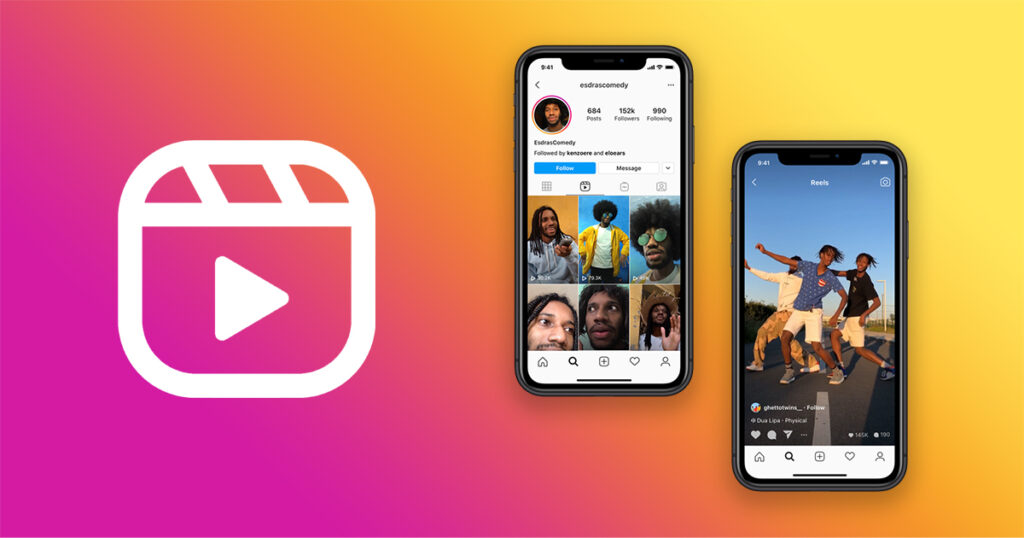
Instagram was launched in 2010, it has grown into a cultural force. While Meta doesn’t publish Instagram’s profit precisely, it is estimated that Instagram’s advertising revenue alone reached approximately $39 billion in 2023 (and will likely make up over half of Meta’s US ad revenue in 2025). The cultural and financial impact of the platform is impossible to understate.
However for millions of disabled people, the short-form-video experience is incomplete, frustrating, and often exclusionary.
The missing accessibility features
The core issue lies in the lack of support for industry-standard accessibility features:
Closed captions are not fully supported
Closed captions (CC), like those found on Netflix or broadcast television, are not really possible on Instagram. Closed captions are a vital feature for the deaf and those hard of hearing community. They usually appear at the bottom of the video with high-contrast text (eg white text on a black background) and, crucially, can be switched on and off by the user. They also allow for adjustments in text size and shape, and can be picked up and processed by assistive technologies.
Instagram offers some users automated closed captions but it doesn’t let users edit this text or really control any aspect of it relying on automation. It’s not possible to add a relevant caption file which is essential for accuracy and compliance.
Open captions which are often ‘burned’ directly into the video file, meaning they cannot be turned off, adjusted, or read some assistive technology. These are possible but which is something, but open captions have been normalised as an aesthetic addition to a video, rather than an accessibility need. They are often flashy and are used to drive engagement rather than serve deaf people and those with hearing loss.
Audio description is not possible
Equally, audio description which is a secondary audio track that narrates key visual elements for people who are blind or have low vision is not a built-in possibility on Instagram’s video features. This means content creators cannot easily upload a separate audio track to ensure their visual stories are accessible to everyone.
There are 3 core layers of why this is happening
The missing features are basic and would be simple for a company with Meta’s resources to implement. The reasons for this failure are structural and I can sort of break them down into three parts.
- Regulation (the Government layer):
In jurisdictions like the UK, broadcast television is bound by strict laws that force broadcasters to include features like closed captions and audio description. Instagram, however, removes this legal obligation because it is classified as a tech platform, not a traditional broadcaster, allowing it to operate in a regulatory grey zone with fewer accessibility requirements. - Legal Liability (the structural layer):
On broadcast TV, the channel or network is legally responsible for the content’s accessibility. On Instagram, that legal liability has been effectively shifted to the user creating the content. The platform doesn’t feel compelled to provide the tools because the creators shoulder the burden. Netflix only started to take captioning seriously after they were sued in 2015. (Does the European Accessibility Act apply? Quite possibility, but that’s another post) - Culture (the top-down layer):
Ultimately, this points to a deep-seated cultural issue. Meta has a long, public history of deprioritising accessibility features in favour of new monetisation tools and engagement drivers. Threads was launched without features to add alt text. The lack of basic functionality points to a persistent top-down culture where the needs of disabled users are not treated as a priority, if at all.
What is the solution?
The fix is almost laughably simple for a company of Meta’s scale. They possess virtually unlimited resources and could:
- Establish a dedicated, empowered Accessibility Team within Instagram.
- Run a short development sprint (allocate time) to allow users to upload external caption files (SRT, VTT formats) and separate Audio Description tracks.
- Launch a global marketing campaign to educate content creators on the importance and process of adding these features.
Will they do it?
Instagram short-form-video “Reels” launched over 5 years ago in 2020, and the fact that such a basic, fundamental features are still missing speaks volumes. It is unlikely to happen until the regulatory or public pressure becomes financially too great to ignore.
In the meantime, what are the workarounds?
Use other platforms. Creators who value accessibility should post their video content on platforms like YouTube, which have robust, fully adjustable closed caption support and audio description options, and then link back to their Instagram profile.
The platform may be an cultural force, but until it provides truly accessible tools, it excludes a significant portion of people with health conditions or impairments.
Leave a Reply to Weekly Reading List December 22 2025 – OZeWAI Cancel reply