Blog
-
Does your website need an accessibility statement? (Yes!)
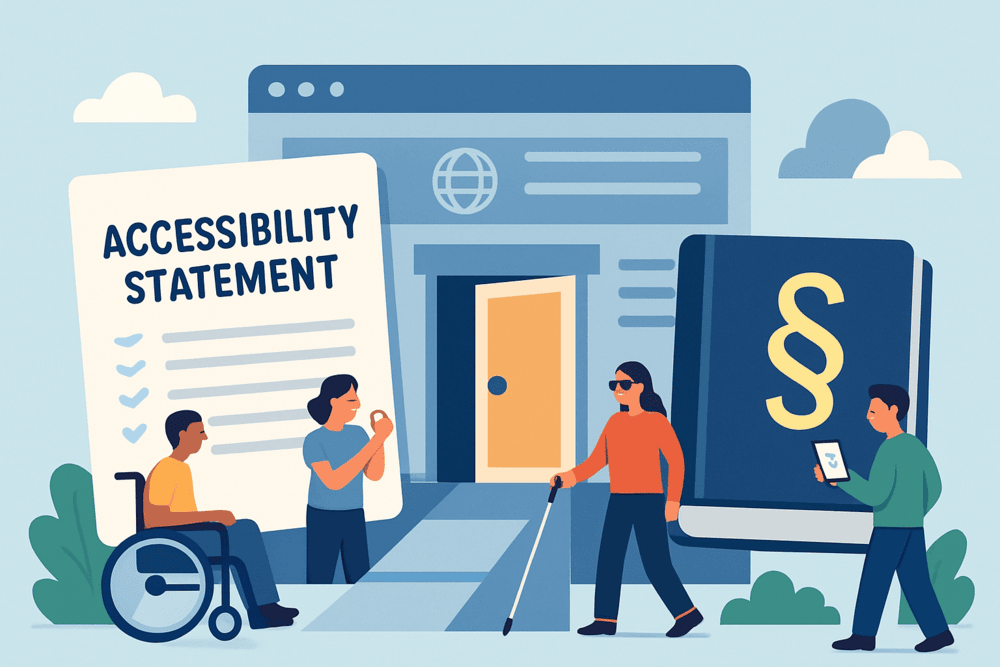
An accessibility statement explains a website’s current level of compliance with accessibility standards, outlines planned improvements, and tells users how to get support if they encounter barriers. While legal requirements vary…
-
What to expect in WCAG 3.0
Imagine building for the future, not just checking boxes. WCAG 3.0 is being designed to be more human-centered, more flexible, and better aligned with how people with different disabilities actually use…
-
Ableism
I recently overheard a conversation between two people with whom I was catching up after last seeing them at my wedding in May. One asked the other, “How is your son Kade [who’s college-aged]…
-
Practical guide to testing keyboard accessibility
(Based on WCAG, RGAA, and real user experience) What if I told you that keyboard accessibility – one of the oldest WCAG rules – is still one of the most broken?…
-
Hidden risks of relying solely on WCAG in the EU
Can a WCAG-compliant website still face multiple accessibility penalties in the EU? Let’s try to take a closer look at fragmented accessibility enforcement. In theory, achieving WCAG 2.2 AA compliance should…
-
When HTML Speaks Clearly
As a developer, I love solving problems. But when I leaned into accessibility, I discovered a new appreciation for the elegance of HTML. All the layers of backend and frontend engineering…
-
How people with disabilities interact with the web
When we talk about web accessibility, it’s easy to think in checklists: alt text, color contrast, keyboard focus. But behind those checklists are real people with different ways of seeing, hearing,…
-
Practical accessibility guide for small businesses & startups
As a web accessibility specialist, I often hear the same objection from founders and small teams: “It’s easy for large companies to invest in accessibility — they have bigger budgets and…
-
Not just WCAG: how web accessibility really works in Europe
When I first prepared for WCAG certification and later specialised in RGAA for projects in France, I thought these two standards would be enough to cover accessibility work both locally and…
-
Website Accessibility – A Simple Guide for Entrepreneurs
As of June 28, 2025, the accessibility act for websites has come into effect. Are you an entrepreneur building your own website without professional help and want to get started? Here…